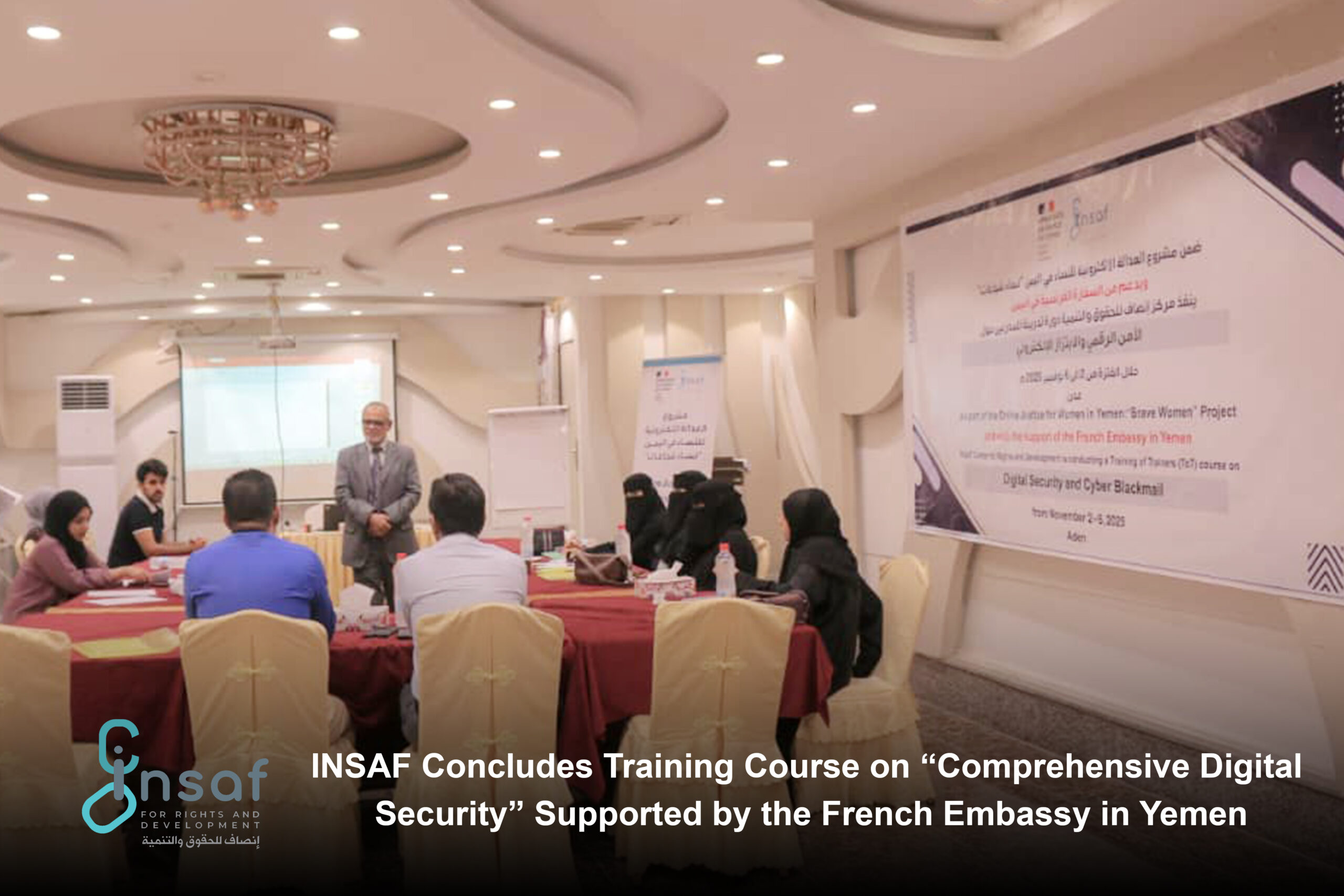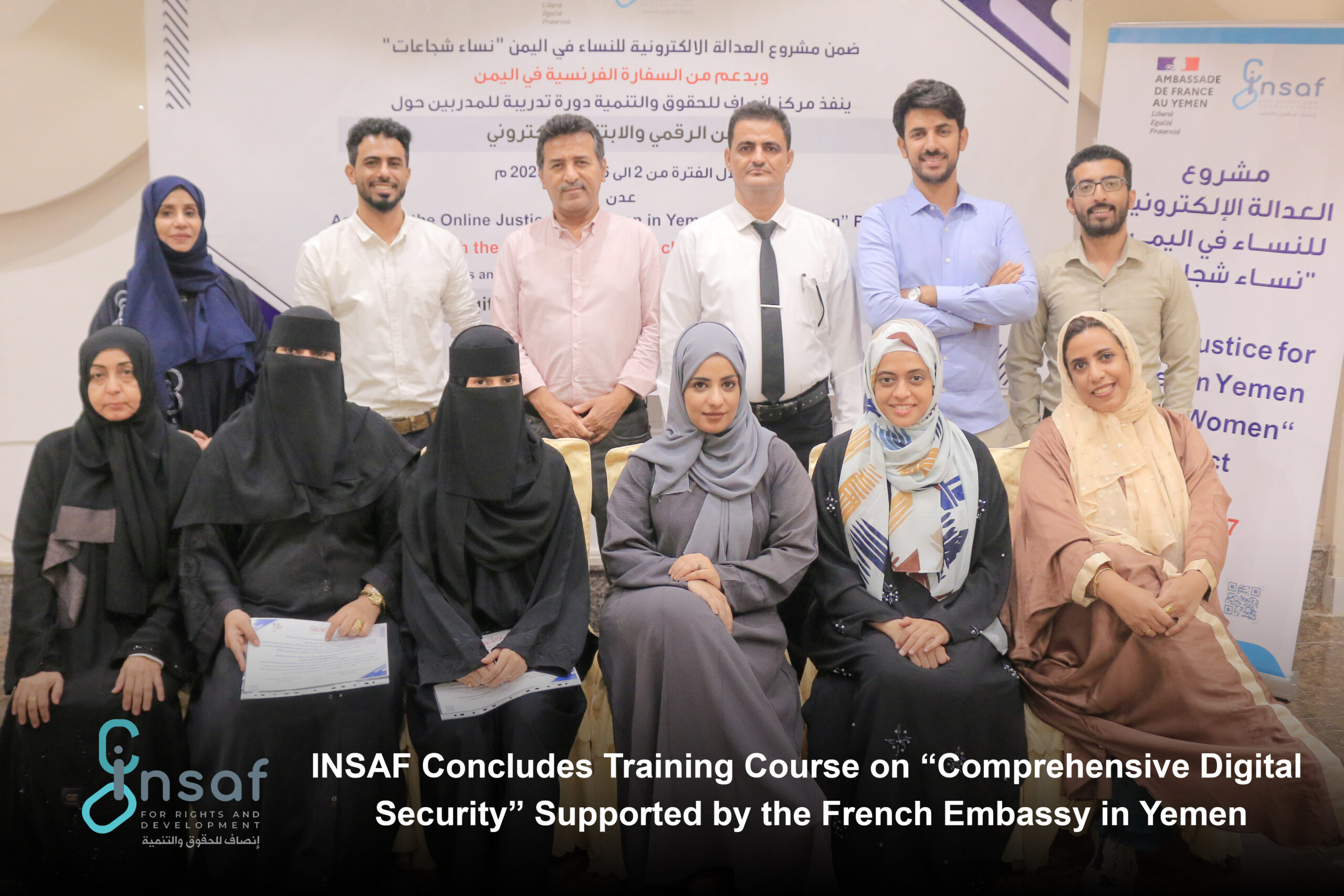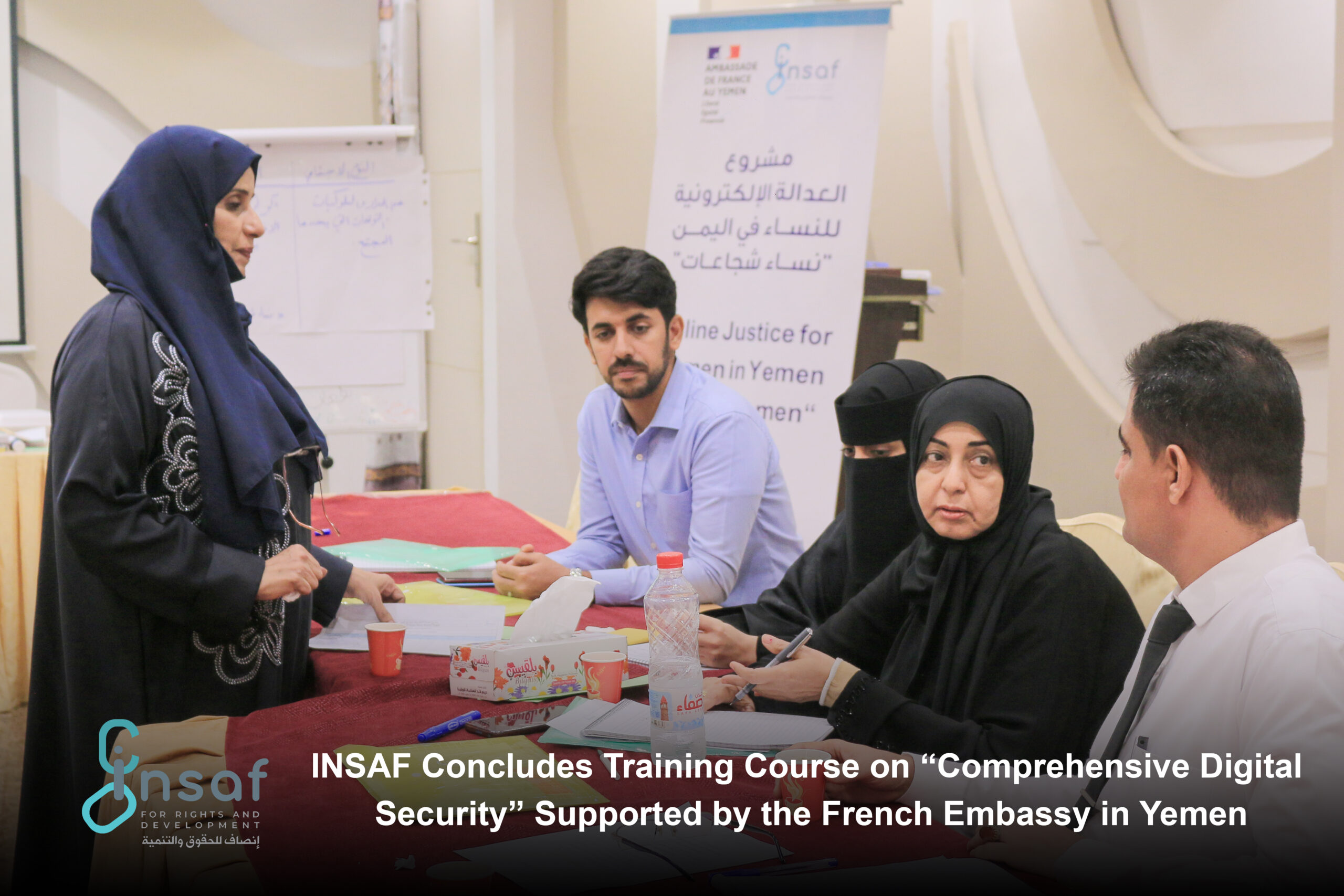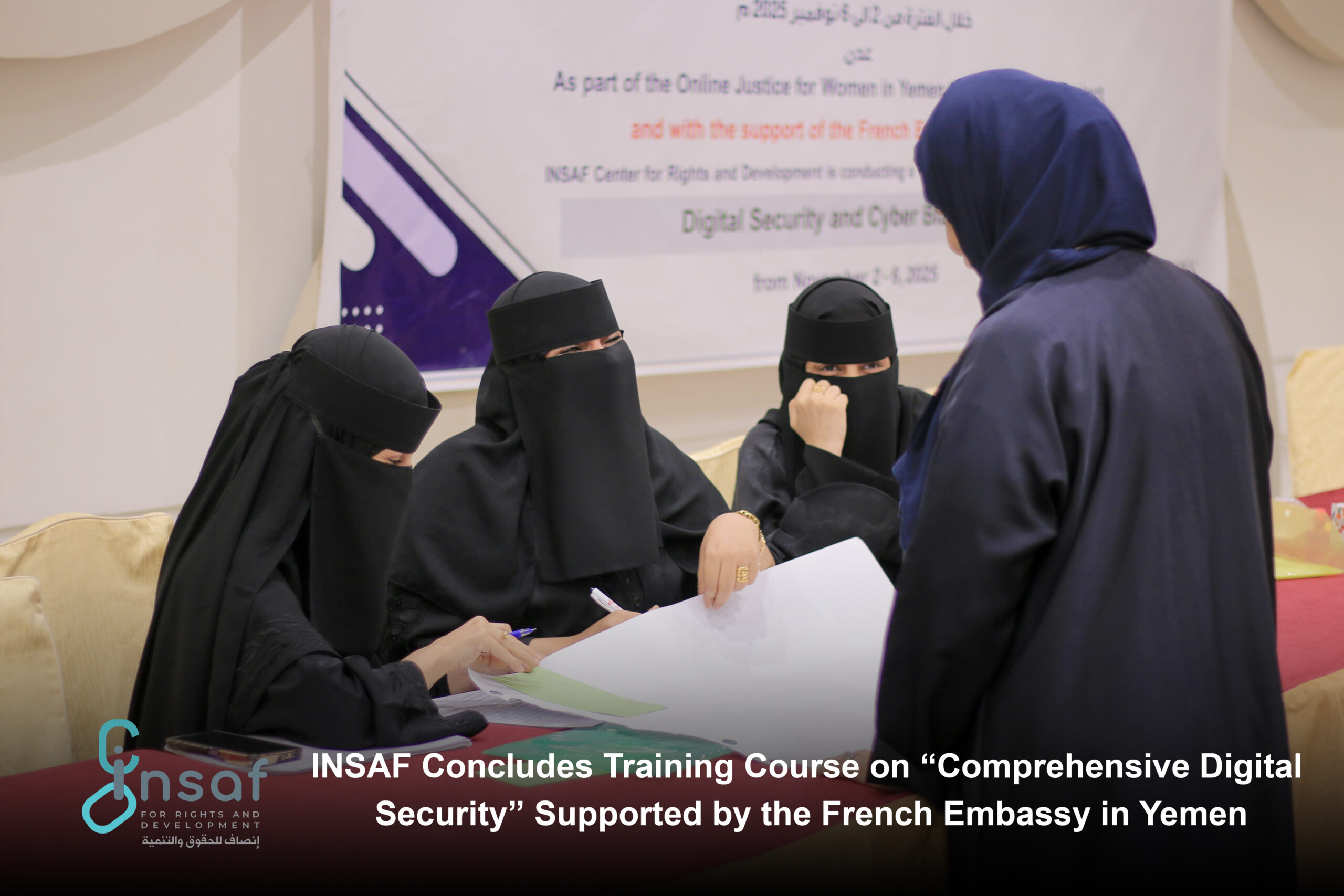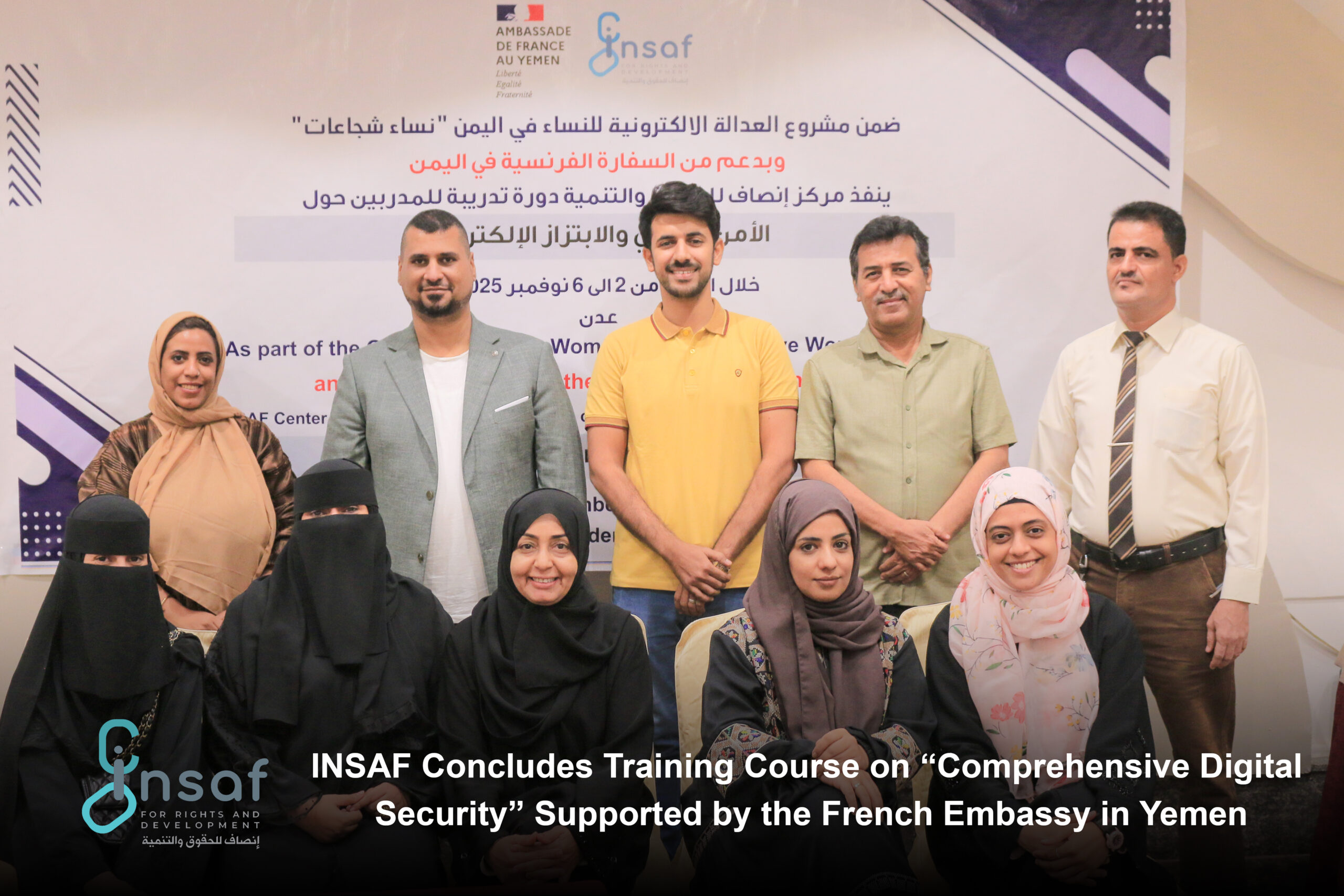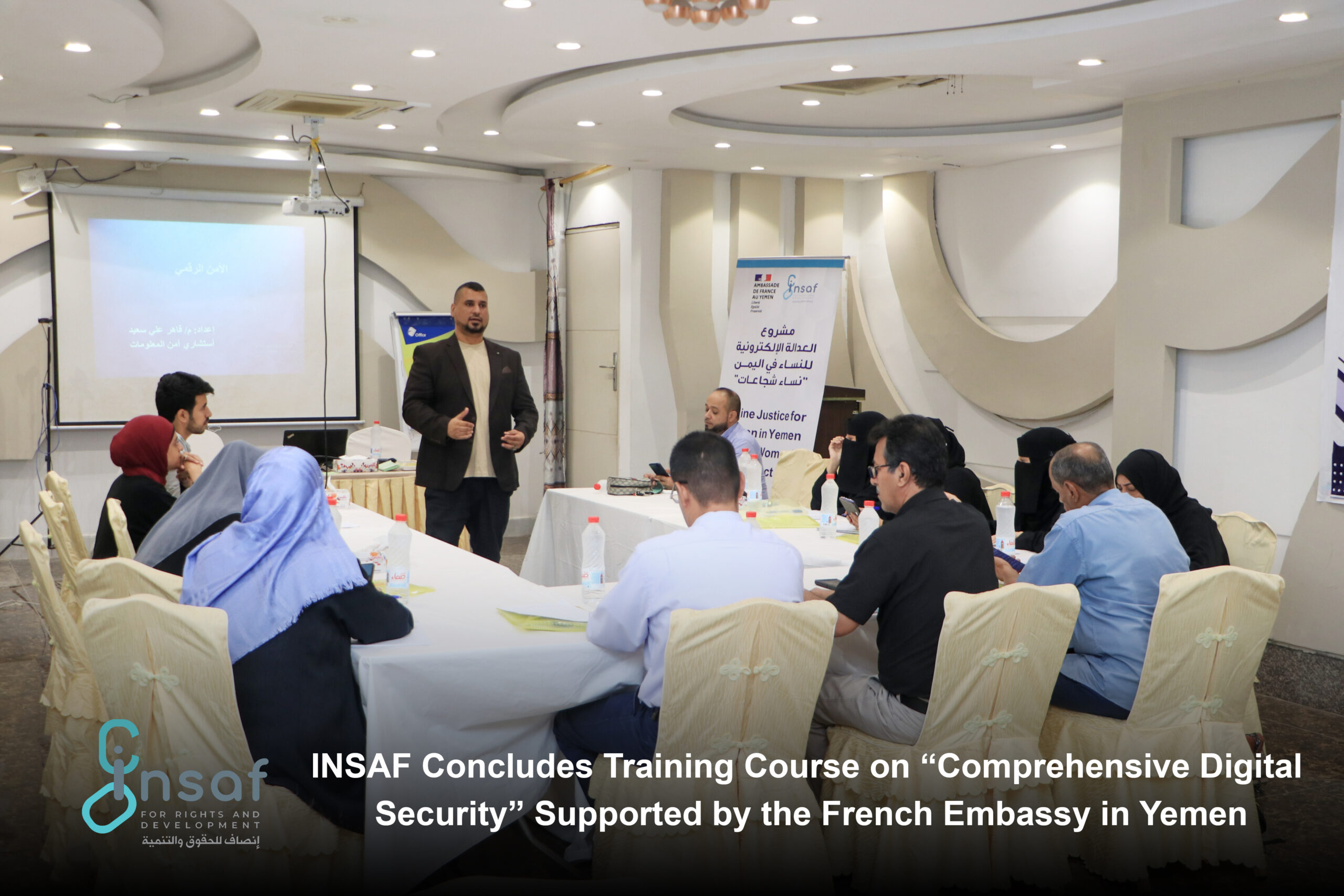

The INSAF Center for Rights and Development has concluded today a five-day specialized Training of Trainers (TOT) course titled:
“Digital Security and Online Blackmail”, implemented within the framework of the project “E-Justice for Women in Yemen – Brave Women”, and supported by the French Embassy in Yemen.
The course aimed to build the capacities of a distinguished group of trainers (both women and men) in the areas of individual and institutional digital security, response to online blackmail, and gender-based digital violence. The training contributes to enhancing digital protection and enabling relevant actors to address cyber threats through professional and rights-based approaches.
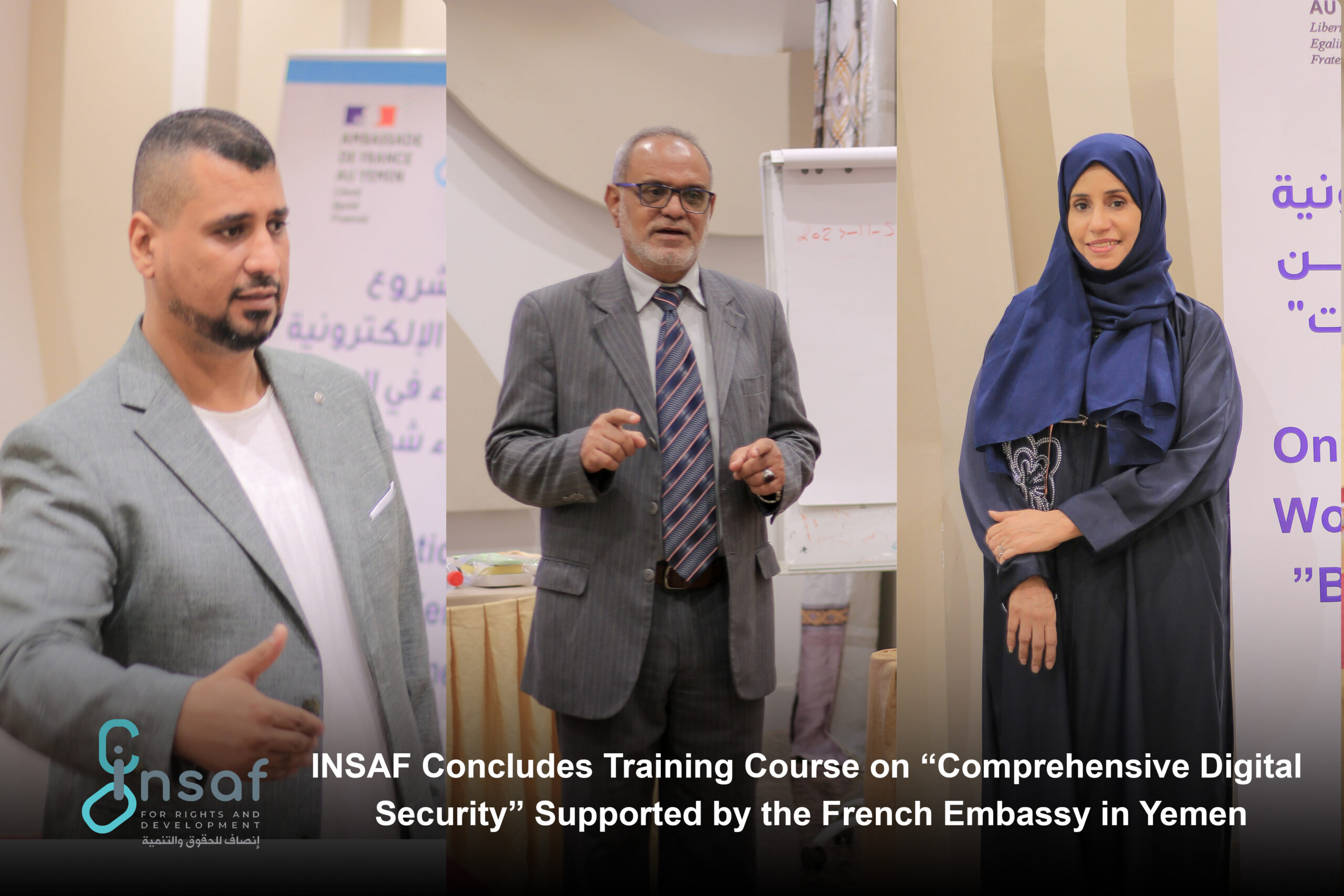
The training sessions were delivered by a group of experts and specialists:
🔹 Eng. Qaher Ali Saeed – Information Security Expert
He emphasized the importance of digital security in protecting individuals and institutions, and introduced practical modules on:
Developing and updating institutional digital security policies.
Practical applications for securing smartphones against hacking and online blackmail.
Designing and applying a Disaster Recovery Plan (DRP) to ensure business continuity.
Enhancing trainers’ skills in delivering training content and simplifying technical concepts for diverse audiences.
🔹 Judge Shaif Al-Sheibani – Head of Training and Qualification Division, Office of the Public Prosecutor
He delivered lectures and training content on:
An introduction to cybercrimes and their characteristics in light of international conventions.
Defining the crime of blackmail and its elements under national law.
Legal pillars of cybercrimes.
The role of legal frameworks in defining crimes of publicity, defamation, or blackmail through social media, supported by judicial case examples.
Types of data obtainable from service providers and their role in tracking perpetrators.
🔹 Dr. Rania Khaled – Assistant Professor of Sociology, University of Aden
She addressed:
The concept of gender and the distinction between gender and biological sex.
The concept, goals, and principles of case management.
The roles of different stakeholders involved in case management.
Skills needed by trainers to effectively deliver case management-related training.
At the conclusion of the program, participants emphasized the importance of continuing such training courses to qualify capable trainers and professionals who can contribute to building a safe digital environment resilient to cyber threats. They praised the efforts of INSAF Center and the French Embassy in supporting and empowering national cadres in digital security and e-justice.
These training initiatives come as part of the Center’s ongoing efforts to strengthen the capacities of individuals and institutions and enhance the quality of rights-based and developmental work, ensuring a more responsive approach to the needs of the local community.