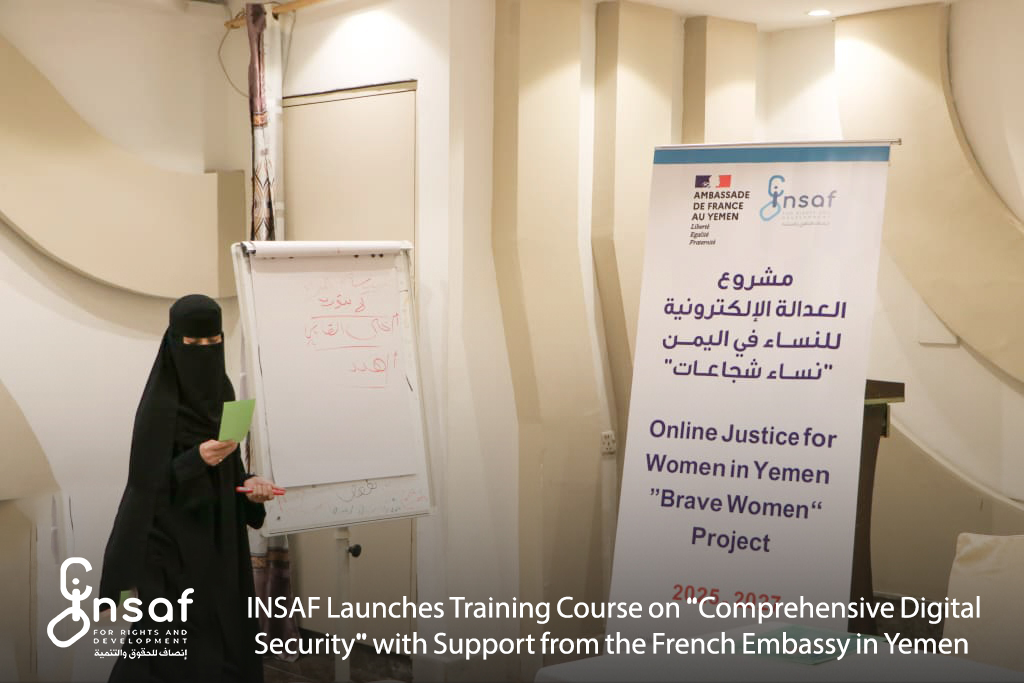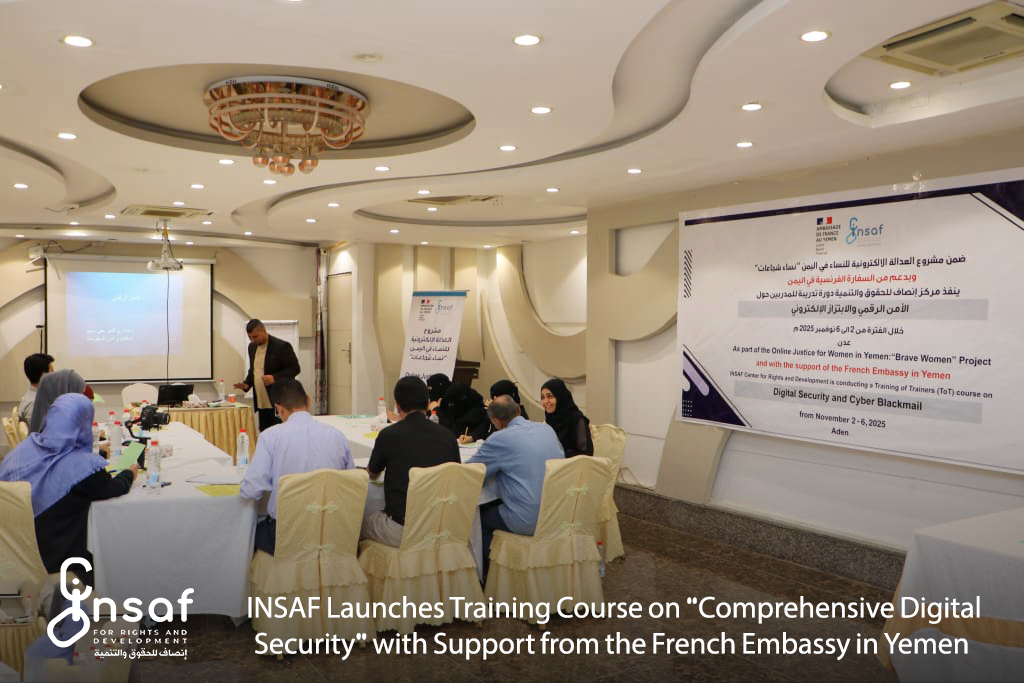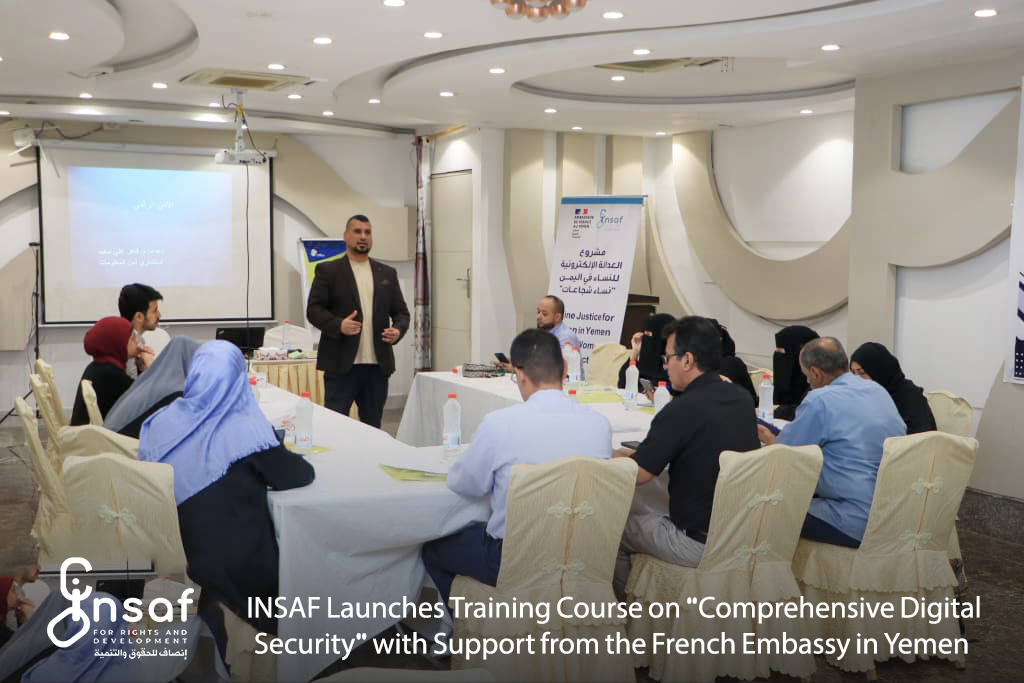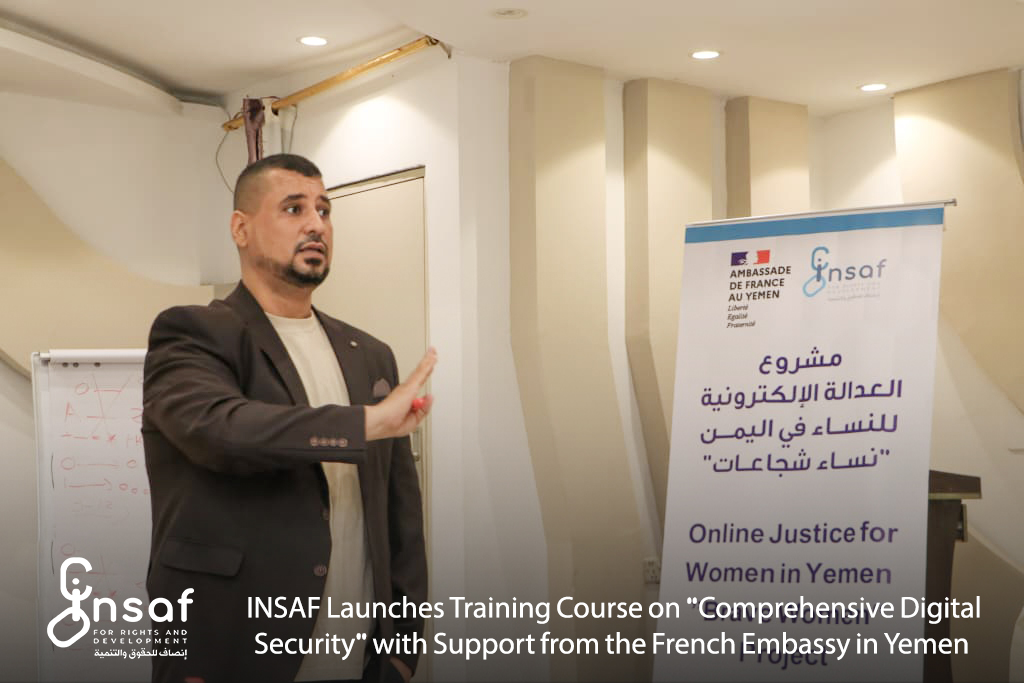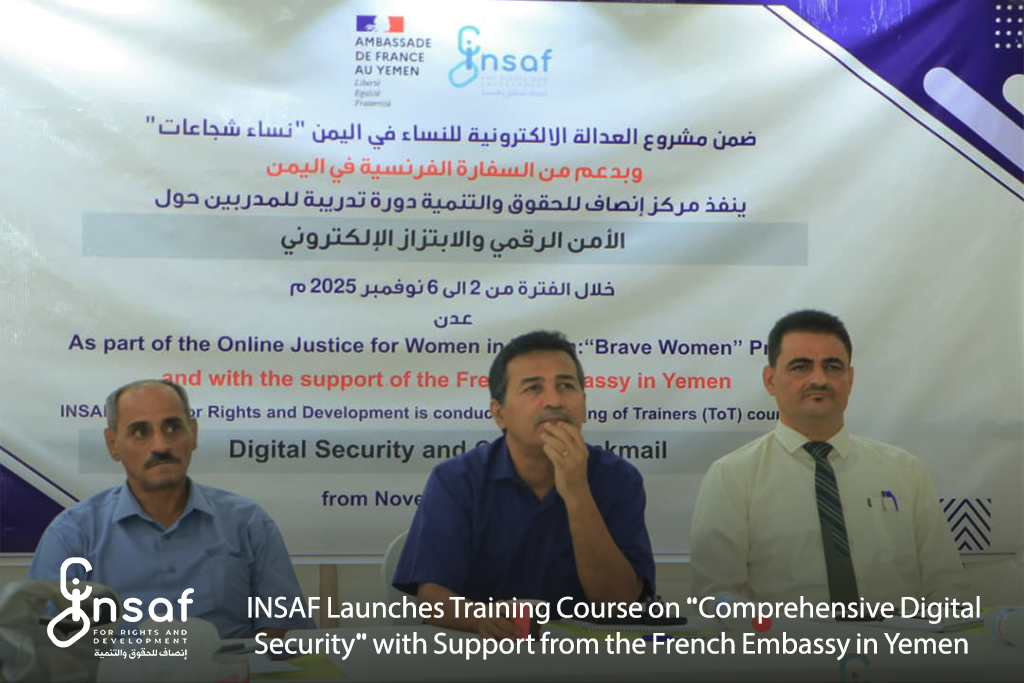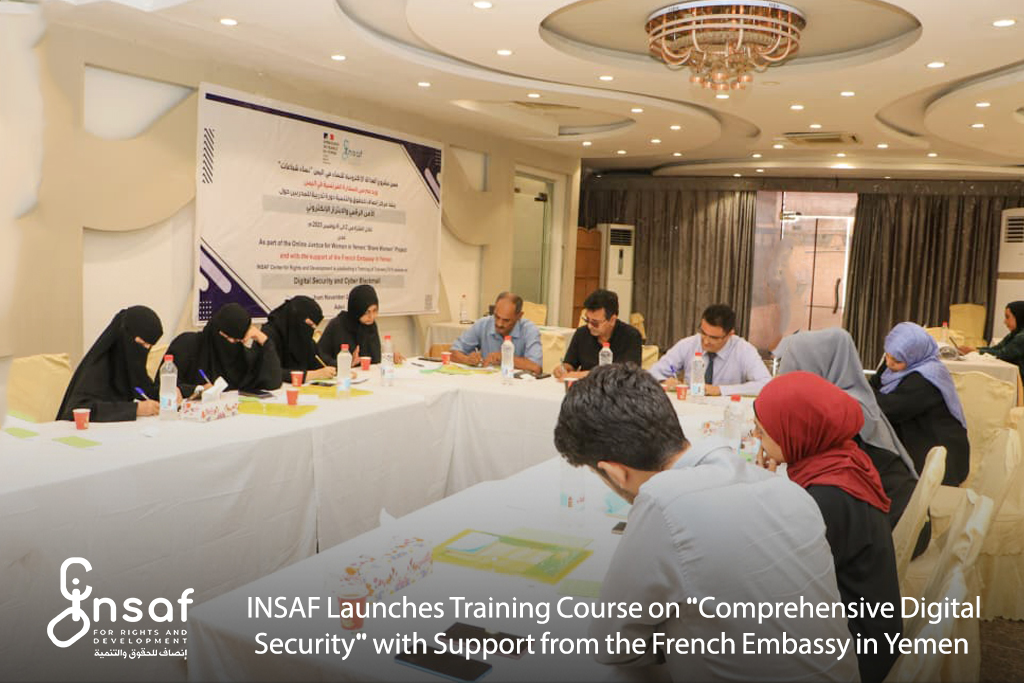

As part of the project “E-Justice for Women in Yemen – Brave Women”, and with support from the French Embassy in Yemen, the INSAF Center for Rights and Development has launched a specialized Training of Trainers (TOT) course titled “Digital Security and Online Blackmail”, which will run for five consecutive days.
The training aims to build the capacity of a select group of male and female trainers in the areas of individual and institutional digital security, response to online blackmail, and gender-based digital violence, thereby enhancing digital protection and enabling relevant institutions to address cyber threats using professional and rights-based approaches.
At the opening of the training, Mr. Saleem Al-Aghbari, INSAF’s Programs Director, welcomed the participants, emphasizing that the course is designed to be interactive and participatory — tailored to the needs of institutions and stakeholders — and serves as an opportunity to create a core group of skilled trainers capable of equipping their institutions with expertise and knowledge in digital security and cyber extortion.
Al-Aghbari noted that the participating institutions contributed to the design of the training program and continue to enrich it through participants’ input, adding that these institutions will also play an active role in leading the implementation of the training’s outcomes in practice.
The first day of the course covered advanced technical aspects of digital security and related international standards, with practical exercises on data protection, access management, institutional system security, and digital risk analysis.
The five-day intensive training features a distinguished group of experts and trainers in technical, legal, and gender-based digital violence fields. It is expected to conclude with the launch of institutional training and awareness initiatives led by participants to promote a culture of digital safety and combat online blackmail and violence against women and girls.
These training programs are part of INSAF’s ongoing efforts to build the capacities of individuals and institutions, enhancing the quality of human rights and development work and ensuring a stronger and more responsive approach to local community needs.